After working with leading Web3 projects through critical moments, we understand how to protect trust, control narratives and communicate with precision when it matters most.
Book a Strategy Call
After working with leading Web3 projects through critical moments, we understand how to protect trust, control narratives and communicate with precision when it matters most.
Book a Strategy Call Intro
While the core principles of crisis management are universal, Web3’s decentralized structure creates unique hurdles. There is no single war room or unified voice, just a distributed team where this lack of centralization makes containment harder, coordination slower and mistakes painfully public.
This environment creates a paradox: the same transparency that builds trust in good times can amplify chaos during a crisis. The solution isn’t to abandon transparency, but to practice it with discipline. Teams that emerge stronger are defined by this disciplined response, mastering the art of gathering facts and communicating with clarity, all while managing an evolving situation under extreme pressure.
This blog post breaks down how effective crisis management actually works in Web3: what prepared teams do differently, how communication strategies shift to cater to the needs of the moment, and why the right response can shape a company’s trajectory long after the crisis itself has passed.
Facts Before Feelings
When an exploit or outage hits, the natural instinct is to rush out a statement. But this impulse to reassure the community without having all the facts can backfire spectacularly.
“It’s okay if the CEO waits 24 hours. That time buys you clarity. Guessing early leads to more damage.”
The first step isn’t communication; it’s coordination. For decentralized teams, this means methodically gathering verified facts across geographies and departments. The inherent delays caused by time zones and stakeholder approvals make rapid statements uniquely risky. Remember, getting the facts right is always more important than being fast.
Don’t Overshare, Communicate with Context
While transparency is a core Web3 value, a live crisis demands strategic communication. For instance, if a vulnerability is discovered, broadcasting the technical details before a patch is ready can invite copycat attacks. The wiser move is to acknowledge the issue, assure the community you are working on a fix, and keep sensitive details private until the threat is contained.
As one expert notes:
“There’s a way to say ‘this is evolving’ without exposing every vulnerability. That’s what builds long-term trust.”
The goal is to share what helps your users, not what helps your attackers.
The right approach is about sharing only what helps.
Narrative Control Is a Long Game
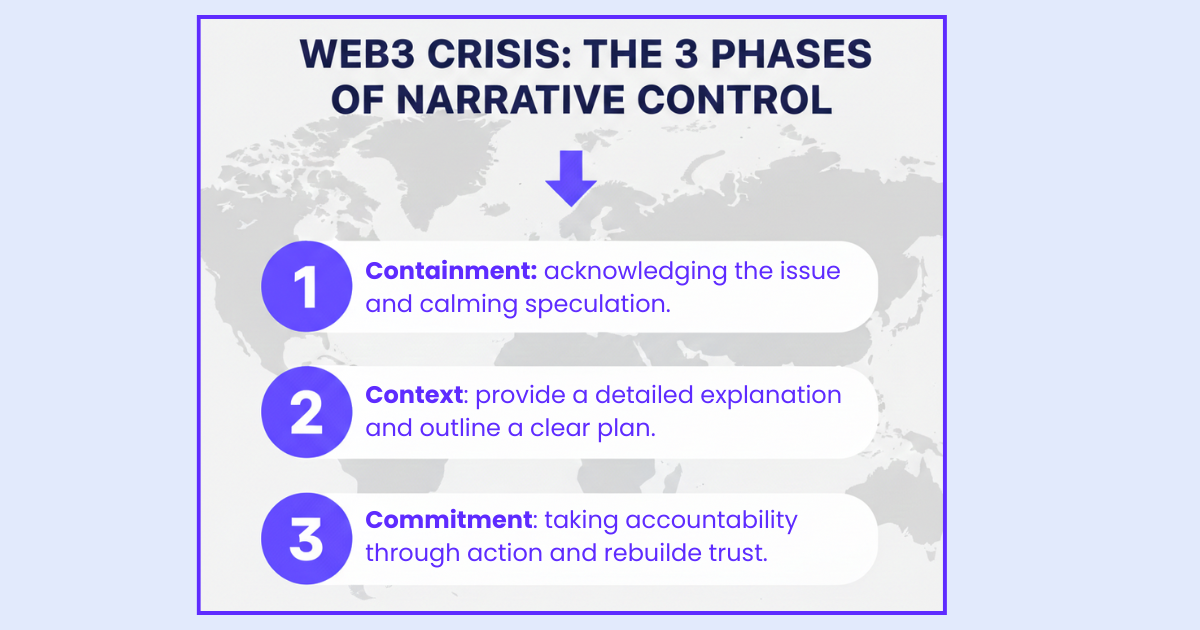
A crisis unfolds in phases, and your communication strategy must evolve with it. What works in the first hour won’t work in the first week.
- The initial response is about containment: acknowledging the issue and calming speculation.
- The next phase is about context: providing a detailed, factual explanation of what happened and outlining a clear plan.
- The final, longest phase is about commitment: demonstrating accountability through action and rebuilding trust over months.
Mastering the narrative is about adaptation and alignment. Knowing when to speak, what to say, and how to say it isn’t just a detail, it’s the difference between gaining trust and losing everything.
Internal Process Prevents Public Mistakes
In Web3, the line between a founder’s personal account and the company’s voice is dangerously thin. While that accessibility builds community in good times, during a crisis, it becomes a liability. One emotional tweet, sent in the heat of the moment, can tank a brand faster than any exploit.
As crisis expert Ronnie advises:
“No one person should control the messaging during a crisis. Group approvals protect the brand from itself.”
This is why a clear internal process is your best defense. Establishing guardrails—like a mandatory two-person review for all public statements—isn’t about bureaucracy; it’s about discipline.
This process ensures every communication is deliberate, strategic, and free of emotion, separating a professional response from a public meltdown.
Prepare Before a Crisis Hits
A crisis response plan can’t be drafted in the middle of the storm. True preparation begins with rigorous scenario planning, internal drills, and predefined communication flows long before they are needed.
The most resilient teams are the ones who have rehearsed, running simulations based on their specific vulnerabilities. At MarketAcross, we guide clients through this process, covering everything from drafting press releases to aligning stakeholders and prepping influencer outreach.
As one team lead put it after a drill: “When the real thing happens, those drills make the difference. No panic. Just execution.”
Learn more about our crisis comms strategy work.
KYA: Know Your Audience
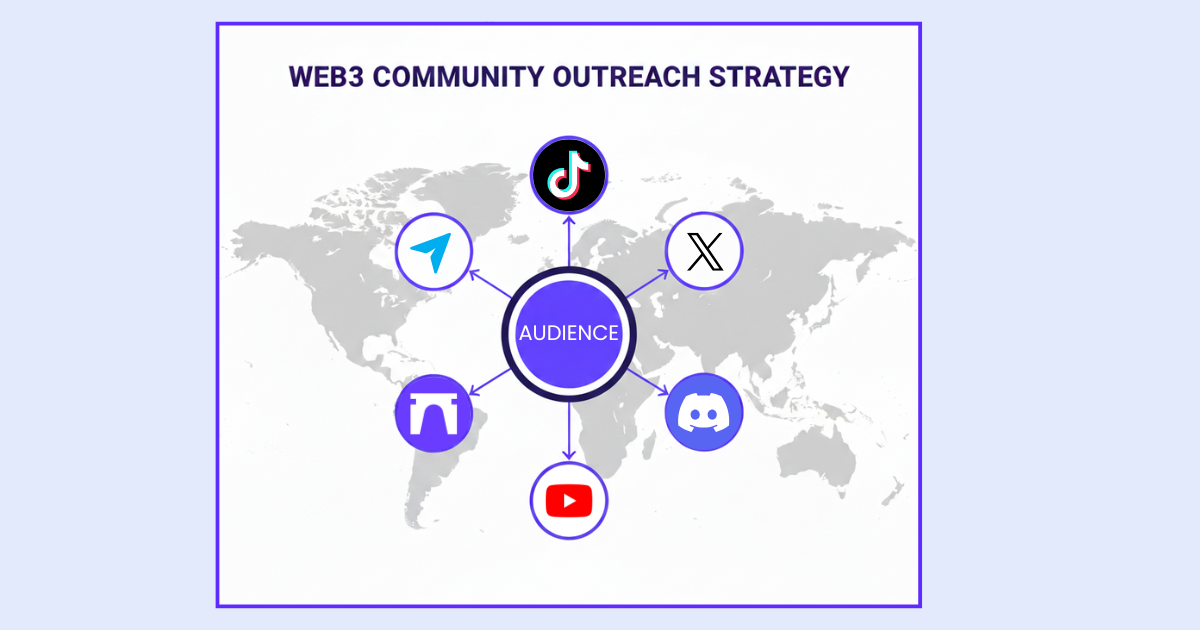
Your communication channel sends its own signal. A formal blog post signals authority and creates a source of truth, but it can also feel distant. To truly manage a crisis, you must go to the platforms where your community lives and breathes.
The best teams in the world understand that engaging in real-time on platforms like X, managing chaos in Discord, working with KOLs on platforms like TikTok, Telegram or even Farcaster to build credibility from the inside out, is oftentimes what makes the difference in your message being effectively amplified.
Knowing which platforms are relevant for your brand may seem obvious, but it must be said.
Choosing the right channel shows you understand your own community.
Strong Brands Are Forged in Crisis
A crisis is the ultimate test of a brand’s character. Handled well, it can be a rare opportunity to accelerate trust and prove what you stand for.
The most respected brands leverage these moments to their advantage. They are praised for their leadership clarity and decisive action, turning a potential disaster into a demonstration of their values.
This isn’t a luxury reserved for the well-funded. Credibility isn’t bought when disaster strikes, it’s earned by the discipline, preparation and strategic communication you commit to long before the storm hits.
For example, Bybit earned widespread praise after its hack because it had the financial confidence and leadership clarity to reassure users. They didn’t just survive the crisis — they leveraged it.
Not every brand has that runway, but any brand can invest in a communication strategy that builds credibility before they’re being tested on a global stage.
Final Word: Web3 Crisis Playbooks Must Evolve
In an age of AI-generated misinformation, zero-day exploits and high-speed liquidations, Web3 brands need crisis playbooks that are just as agile as their tech.
The difference between chaos and clarity isn’t luck — it’s preparation, team alignment and expert communication.
If your protocol’s future depends on user trust, don’t leave your messaging to chance.
Want to pressure-test your crisis strategy? Let’s talk.

After working with leading Web3 projects through critical moments, we understand how to protect trust, control narratives and communicate with precision when it matters most.
Book a Strategy Call